
How We Plan Cross-Cultural Weddings at Phool & Pheras
One of the most common questions we get asked is: How do you plan a cross-cultural wedding?
And honestly, our answer always starts with this: we plan from experience.
I am Gujarati. Nikhil is Kannadiga. Our own wedding was cross-cultural in every sense of the word, so we understand first-hand what it takes to bring two very different cultures together without making either one feel diluted. It shows up in the food. In the rituals. In the music. In the décor. In the way families gather. And sometimes, even in the kind of events you choose to host.
But here’s the thing.
A cross-cultural wedding is not just about adding one Gujarati function, one Kannada function, one Italian bar, one Tamil ritual, one Punjabi dance floor or one “tropical” event because someone is from an island.
That is the easy version.
And honestly, it is also the most obvious version.
Culture is not a theme. It is memory, food, language, family, childhood, music and the way two worlds slowly find a shared rhythm.
At Phool & Pheras, we do not want to give couples the template version of their own culture. We do not want to take the most commonly seen visual references and turn them into décor. We do not want to make a wedding feel like a moodboard that could belong to anyone.
Because culture is not a theme.
It is memory. It is food. It is language. It is family. It is childhood. It is music. It is the way your parents describe a ritual. It is the snack that reminds you of home. It is the flower you saw growing up. It is the place you fell in love. It is the way two families, sometimes from completely different worlds, begin to find a shared rhythm.
So when we plan a cross-cultural wedding, we look at it as an extended form of storytelling.
Not storytelling in the obvious, overdone way. But in a way that is researched, nuanced and deeply personal.
We want to find the details that guests may not have experienced before. The details that do not scream for attention, but make people pause. The details that make someone say, “Wait, how did they think of this?”
That, for us, is where the magic lies.
Bangalore Makes This Even More Interesting
Being based in Bangalore has shaped a lot of the way we think about cross-cultural weddings.
Bangalore has always been a melting pot of cultures. Most couples who come to us are cross-cultural in some way. Sometimes they are from different parts of India. Sometimes they are from different countries. Sometimes they are from different faiths. Sometimes they may technically belong to similar communities, but their childhoods, upbringings, families and tastes are completely different.
So we never begin with assumptions.
We begin with the two people in front of us.
Where did they grow up? What did their homes feel like? What food brings them comfort? What rituals actually matter to their families? What parts of tradition feel sacred to them? What parts feel flexible? What places shaped their relationship? What have they travelled through together? What do they find beautiful? What do they never want at their wedding?
And then we start building.
Not by copying cultural references as they are usually seen, but by asking how they can be reinterpreted in a way that feels new, thoughtful and still rooted.
We never begin with assumptions. We begin with the two people in front of us.
Not The Ghisa-Pita Version Of Culture
This is something we feel very strongly about.
When people think of cultural weddings, the visual language can often become very predictable.
A Gujarati reference becomes mirror work and bandhani in the most expected colours. A South Indian wedding becomes only temple bells, banana leaves and marigolds. A beach-origin story becomes shells, sand and blue drapes. A European love story becomes lemons, wine bottles and blue and yellow tablecloths.
None of these things are wrong.
But they are also not the only way to tell a story.
We are far more interested in what sits beneath the obvious reference.
If we are looking at Gujarat, can we take the structure of bandhani but soften the palette? Can we make it feel modern without stripping away its identity?
If we are looking at a South Indian wedding, can we keep the ritual architecture intact but bring in colour, softness and detail in a way that reflects the bride’s personal style?
If we are referencing Italy, can we move beyond the postcard version of Italy and look at the specific city, the parks, the herbs, the architecture, the bar culture, the kind of flowers that actually grow there?
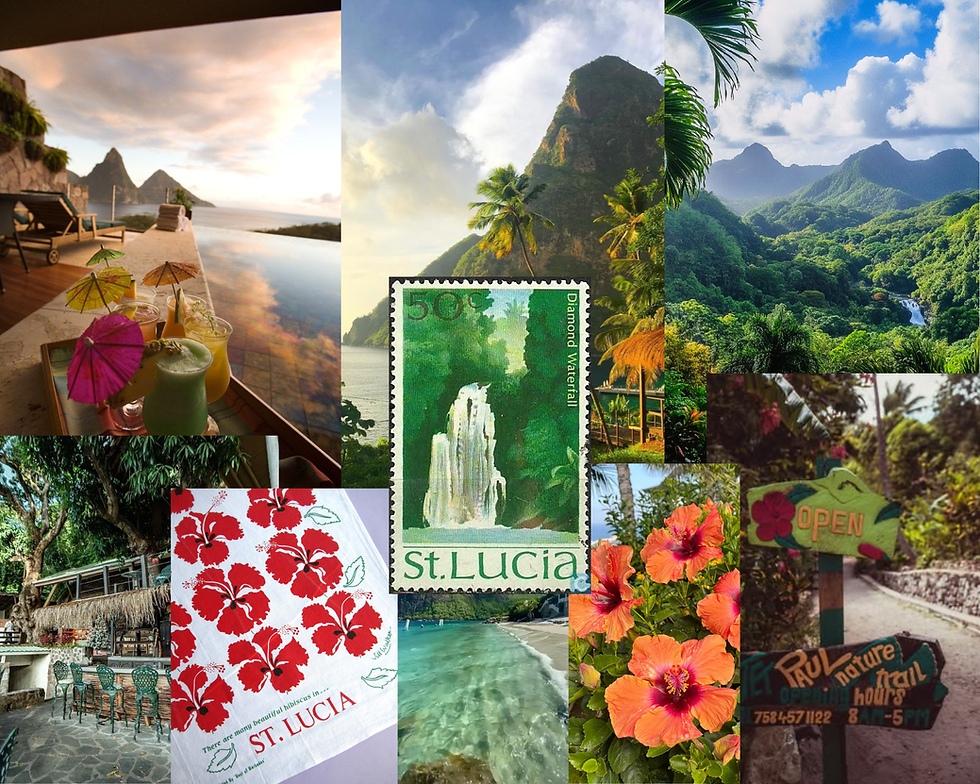
If we are referencing St Lucia, can we avoid making it a generic tropical event and instead study its flora, movement, warmth and its quiet connections to India?
That is the difference between décor that is simply inspired by something and décor that has actually been thought through.
The point is never to decorate with culture. The point is to understand it, reinterpret it, and make it feel personal to the couple.
A Few Glimpses From Weddings We Have Planned
Over the years, we have planned cross-cultural weddings across different communities, countries, faiths and family histories. Each one has looked completely different, because the point is never to repeat an idea. The point is to understand the couple in front of us and build from there.
Here are a few small glimpses into how this thinking has translated across different weddings we have planned. Not as templates, because we do not believe in those, but as examples of how personal the process can get.
For one couple, a Gujarati groom from Mumbai and a Kannada bride from Bangalore, their wedding carried pieces of both their roots and the place where they fell in love: Italy.
The Haldi became a softer, more modern take on Gujarati bandhani, with pastel tones, fafda-jalebi, Mumbai-inspired food and garba woven into the day. The wedding honoured the bride’s Kannada roots through traditional mandap pillars, poo kolam, lotus flowers and a palette that still felt fresh and modern. Their Sangeet quietly brought in Italy through park-inspired seating, Italian bar details, travel recommendations, bougainvillea, and herbs like basil, oregano and thyme on the tables.
It was not “Italy” as a theme. It was Milan as they remembered it.


It was not Italy as a theme. It was Milan as they remembered it.
For another couple, a Tamilian bride from Bangalore and a groom from St Lucia, we wanted to reference St Lucia without making the celebration feel like just another beach-inspired event.
So the Sangeet used details like monstera leaves, hibiscus, hand-painted tablecloths and small facts connecting St Lucia and India. Their wedding, on the other hand, was rooted in the bride’s childhood memories of visiting temples with her family, with a mandap inspired by the image of a peacock perched above it in the early morning.

For another couple, who had both Christian and Hindu ceremonies, the two events were designed as completely different emotional worlds.
The Christian ceremony was colourful, whimsical and inspired by the Garden of Eden, with custom hand fans, order of ceremony details, confetti sleeves and small nods to their gaming roots. The Hindu wedding moved into deeper, more royal tones, with maroon, purple, gold, ghungroo sticks, flower cones, diyas and a floating mandap.
Same couple. Same wedding. Completely different expressions of who they were.

Same couple. Same wedding. Completely different expressions of who they were.
Our Process Is Research-Led For A Reason
When couples come to us, our approach is not to immediately decide a colour palette or pull out a standard reference deck.
We spend time understanding.
We research the cultural references properly. We look at what feels authentic, what feels overdone, what feels personal, what can be reimagined, and what should be left untouched. We think about how a guest will move through the event. What they will eat. What they will smell. What they will hold in their hands. What they will notice only after sitting down. What will make the family feel seen.
Because the most meaningful design is not always the loudest thing in the room.
Sometimes it is a herb plant on a table that reminds you of a place you fell in love.
Sometimes it is a motif from your childhood reimagined in a palette no one expected.
Sometimes it is a mandap that feels like a memory from a temple visit.
Sometimes it is a menu that gives guests a taste of where the groom grew up.
Sometimes it is a tiny printed fact that connects two countries sitting oceans apart.
That is the kind of detail we care about.
The most meaningful design is not always the loudest thing in the room.
A Cross-Cultural Wedding Should Not Feel Like A Compromise
For us, a cross-cultural wedding should never feel like two sides taking turns.
It should not feel like, “This event is for your family, that event is for mine.”
It should feel more fluid than that.
It should feel like two histories finding a shared language. Two families discovering each other. Two individuals building something that belongs to both of them, but looks like neither wedding would have looked on its own.
And that is why we do not believe in the ghisa-pita version of décor.
Your wedding should not feel like something your guests have already seen ten times before. It should not feel like culture has been reduced to a prop. It should not feel like someone typed one word into Pinterest and called it design.
It should feel researched.
It should feel layered.
It should feel personal.
It should feel like someone took the time to understand where you come from and where you are going.
Because a cross-cultural wedding is not about fitting two worlds into one wedding.
It is about creating a new world altogether.
A cross-cultural wedding is not about fitting two worlds into one wedding. It is about creating a new world altogether.
And maybe that is why we love planning them so much.
Because when done with care, a cross-cultural wedding does not feel like a compromise. It feels like a celebration of everything that made you who you are, and everything you are choosing to build together.
With love,
Shuchi
Co-founder, Phool & Pheras


Comments